Wednesday, August 20, 2014

The Holman Ranch


Under the Crown of Spain, what is now called the Holman Ranch was part of the lands bestowed to the Mission San Carlos Borromeo del Rio Carmelo.
When the Mexican government secularized the mission lands, one of the first ranchers in Carmel Valley, Don Jose Manuel Boronda, was granted the Los Laureles Rancho—6,625 acres that included what is now .
Their ranch passed through many hands until the Pacific Improvements Company acquired it in 1882.
From: http://www.holmanranch.com/our_story/our_story.html
Picture from: http://carmelvalleyhistoricalsociety.org/

Wednesday, August 13, 2014

25-acre fire in a remote area in Carmel Valley


Fire crews are battling a 25-acre fire in a remote area in Carmel Valley. The vegetation fire started at 12:52 p.m. Wednesday burning about 5 acres of dry grass near the intersection of Robinson Canyon Road and San Clemente Trail. The fire spread fast as the wind blew the flames uphill past a ridge line

Picture from: @VFisher45
From:  http://www.montereyherald.com/localnews/ci_26330752/crews-battle-5-acre-fire-carmel-valley

San Clemente Creek


San Clemente Creek provides over 25 miles of essential spawning and rearing habitat for the threatened South-Central California Coast Steelhead.

From: http://www.sanclementedamremoval.org/?page_id=43

Blasting the Reroute Channel


Blasting the reroute channel for San Clemente Creek to bypass the San Clemente Dam on August 5, 2014.
From: San Clemente Rancho

Sunday, August 10, 2014

Carmel River August 4, 2014


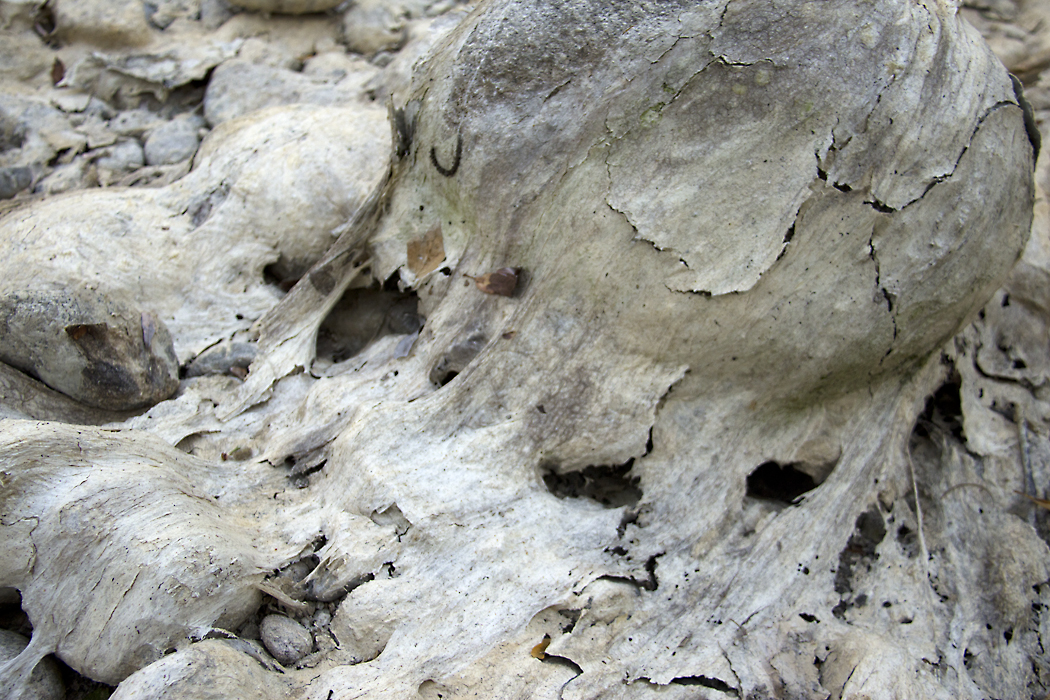
Carmel River rocks covered with dried algae.


Black Rock Creek Dam


The fourth dam on the Carmel River, Black Rock Creek Dam, constructed in 1925 on Black Rock Creek, a tributary to the Carmel River, is used for recreational purposes.

The Waterfall is found in upper Black Rock Creek, which joins San Clemente Creek (the largest tributary to the Carmel River).


The Basin Complex Fire of 2008

"In Big Sur the Basin Complex Fire of 2008 continued to burn for another month, scorching 162,818 acres. After firefighters directed the fire into the still-burning area of an earlier blaze, the combined Basin-Indians Fire burned 240,000 acres, making it a contender for the state’s second-largest wildfire on record. Over 90 percent of the burn was within Los Padres National Forest’s unsettled and wild Ventana Wilderness."
From: Bay Nature

Northern California Lightning Siege of 2008


"Northern California Lightning Siege: Beginning June 20, 2008 and continuing into the early hours of June 21, severe thunderstorms swept across northern and central California. More than 6000 lightning strikes sparked over 2000 wildfires in 26 counties and eventually burned 1.2 million acres."

From: http://www.mrc.com/history_project/stories/MLC.htm
Picture from: http://www.huffingtonpost.com/2014/07/28/california-lightning-storm_n_5628881.html

Big Sur Fire 1916

"Frantic efforts are being made to stem the huge forest fire which is spreading raidly toward the headwaters of the Carmel River and imperiling the Carmel watershed..." Monterey Daily Cypress September 5, 1916.
From: River in Ruin by Ray March, 2012.

Friday, August 8, 2014

The Cottonwood-Sycamore stands


Garland Ranch is home to a variety of landscapes that occur at elevations from 200 to 2,000 feet. From the willow covered banks of the Carmel River through the cottonwood-sycamore stands of the old floodplain, the trails ascend steeply. Atop the northern crest of the Santa Lucia Mountains, the trails encounter open oak savannas and spectacular vistas. Along the way, you will travel through maple-filled canyons, dense oak woodlands, and thick stands of chaparral.

From Inge's Blog: http://ingetraud.wordpress.com/2014/07/01/my-country-blog-hop/

California Idiomality Areas ca. 1800

California Idiomality Areas ca. 1800

43. Ohlone (San Francisco, Santa Cruz, Santa Clara, San Jose) dialects.
53. Rumsen dialects.
54. Mutsun (Humontwash) dialects.
55. Esselen language.
56. Chalon dialects
57. Teopthalap (Ennesen, Slinan) dialects.

From:Native Americans of California and Nevada by Jack Forbes, 1969.

Friday, August 1, 2014

Olivella beads

  "The rancho provided another means whereby Indian labor was integrated into the Hispano economy. Beginning in the 1780's soldiers and settlers were allowed to graze stock in the countryside, using Indian labor entirely. Title to the land always was retained by the Crown, and the ranch owner almost always lived in town, leaving his stock and crops in the hands of Indians working on a share-crop basis. Gradually the Indians became serfs similar to the economy of the Deep South."
From: Native Americans of California and Nevada, by Forbes, 1969.

Olivella beads abundant during the Protohistoric and Historic Periods in central California.
From: http://cla.calpoly.edu/~tljones/CA-MNT-1748H,%20Cultural%20Chronology.htm


Thursday, July 17, 2014

Rio del Carmelo 1835


"The earliest map we know for our stretch of coast is the diseño of Rancho San José y Sur Chiquito above. A diseño is a hand-drawn descriptive map that was submitted in an application for a Mexican land grant. Rancho San José y Sur Chiquito was first granted to Teodoro Gonzales in 1835."

From: Red Egg Gallery
Map from The Bancroft Library, University of California, Berkeley

Wednesday, July 2, 2014

Coastal phytoplankton off the Central California coast

This copepod from Monterey Bay is less than one millimeter (1/32 inch) long.
“Traditionally, we picture a dense phytoplankton [microscopic algae] bloom near the surface, full of grazing copepods. Yet we’ve detected large numbers of copepods that appear to be feeding at the interface between the bloom and plumes of upwelled water,” said MBARI molecular ecologist Julio Harvey. “The copepods are at edges of the bloom, not just inside it.”

"Near-coastal retention of larvae affects the ecology of many marine species. In coastal upwelling ecosystems having strong offshore transport, larval ecology is greatly influenced by nearshore retention in bays and in the lee of headlands. Further, frontal dynamics along the periphery of retention zones can drive larval accumulation and transport. "

From: http://www.mbari.org/news/homepage/2012/esp-zooplankton/esp-zooplankton.html
From: http://www.sciencedirect.com/science/article/pii/S0022098114001361

Monday, June 30, 2014

With the dam removed, steelhead will gain unimpaired access to 25 miles of spawning and rearing habitats


Carmel River  Up from Hiding Camp
"Existing dams and river diversions have wiped out vital habitat, decimating fish populations and pushing numerous aquatic species to the brink of extinction. Reservoirs are silting up."

"The San Clemente Dam on the Carmel River, is coming down. It's the biggest dam removal project in the state, and it's on schedule. The river is being rerouted for half a mile, while the sediment behind the dam gets consolidated and secured. As the dam is dismantled piece by piece, the natural flow should be restored by October or November 2015.

With the dam removed, steelhead will gain unimpaired access to 25 miles of spawning and rearing habitats. Carmel Beach sand will be replenished, and the habitat for the red-legged frogs will be restored.

We are beginning to learn, if only the hard way, that it is wiser to adjust to nature than to conquer it."

From: Gone Tubin' http://www.mercurynews.com/my-town/ci_26034863/gone-tubin-undamming-carmel-river-is-cause-excitement
Picture from:https://www.flickr.com/photos/stblaize/ 
 

Tuesday, May 6, 2014

The first-ever Carmel River Festival and Feast 2013


The first-ever Carmel River Festival and Feast in Carmel Valley was organized to celebrate the start of the 92-year-old San Clemente Dam's removal.

The $84 million project to reroute the river and destroy the 106-foot-high dam is expected to take several years but restore 25 miles of spawning and rearing habitat for the steelhead trout, as well as improve the ecosystem along the waterway.

"It's a new age of restoration," festival organizer Jack Ellwanger said.
 From Monterey Herald

Carmel River Winter 2013


"Some of the local roads are closed due to flooding."
From October 2013: Life With Jessica

Tuesday, November 26, 2013

Pine Valley

"Pine Valley is a quiet meadow, enclosing the river flanked by tall ponderosas. In its spring bloom the valley's center is field upon field of lupine, poppy, larkspur and mugwort.  There are two waterfalls less than a mile from Pine Valley, both known as Pine Falls."

From: River in Ruin by Ray March
Picture from: VWA

Our Lord's Candle: Hesperoyucca whipplei

Hesperoyucca whipplei is native to southwestern California and adjacent Baja, with a disjunct population near the Grand Canyon. When blooming the flower stalk is up to 10 feet tall, which is tall enough to stick up above the chaparral and a plant in bloom in quite noticeable. 

Friday, November 22, 2013

Under Spanish law, the Esselen were technically free men


"On May 9, 1775, Junípero Serra baptized what appears to be the first Esselen, Pach-hepas, who was the 40-year-old chief of the Excelen. The baptism took place in at Xasáuan, 10 leagues (about 26 miles ) southeast of the mission, in an area now named Cachagua, a close approximation of the Esselen name.

Under Spanish law, the Esselen were technically free men, but they could be compelled by force to labor without pay. More correctly, upon baptism they were considered to be part of a monastic order, subject to the rules of that order."
From: http://en.wikipedia.org/wiki/Esselen_people

Saturday, November 9, 2013

Rescued and relocated 35,000 endangered trout in 2013


Due to drier than normal conditions, the Monterey Peninsula Water Management District initiated its annual Steelhead Rescue Program in the Carmel River in April, several months early.

 As of July 1, 2013 the program has rescued and relocated 35,000 of the endangered trout and will continue its efforts through the season as the Carmel River has dried back from the ocean almost 6 miles.

From: http://www.thecalifornian.com/article/20130712/NEWS01/307120031/35-000-steelhead-trout-rescued-from-rapidly-drying-Carmel-River?gcheck=1

Picture from: moldy chum

an additional 1,488 acre-feet per year


California American Water has been granted additional Carmel River water rights of up to 1,488 acre-feet per year by the State Water Resources Control Board earlier this month.

The real potential benefit  is allowing the company to alleviate demand on the north Marina desalinization plant at the core of the proposed Monterey Peninsula Water Supply Project.

From: http://www.montereyherald.com/news/ci_24373057/cal-am-granted-addition-carmel-river-water-rights
Picture from Marcia's

Carmel River State Beach


Each year, Carmel River State Beach builds up sand and severs the river from Monterey Bay. With nowhere to drain, the water from the river pools at the lagoon. It eventually breaks through the sand and flows into the ocean.

Public Works drains the lagoon by bulldozing part of the stretch of sand that blocks the river and the bay. That drain, however, and the fast-running water that sometimes ensues, can prematurely sweep juvenile steelhead out to sea.  

From: http://www.montereyherald.com/ci_22958452/monterey-county-looks-at-ways-reduce-flooding-at 
Art from: “The Lagoon at Carmel River Beach by Murray Wagnon

Friday, November 1, 2013

Drought of '76


"Cal-Am countered that river vegetation died off not because of overdrafting but because of the 1976-77 drought."
-River in Ruin by Ray March, 2012


"In November 1976,when this photo was taken, Carmel Valley was in the grip of an intense drought." 
 Picture from Schulte Restoration Project

John Steinbeck, Cannery Row


1945
The Carmel is a lovely little river. It isn't very long but in its course it has everything a river should have.
--John Steinbeck, Cannery Row

1603


1603
"A river of very good water but little depth, whose banks are well peopled with black poplars, very tall and smooth, and other trees of Castile and which descends from high white mountains."

-Sebastian Vizcaino, Carmel River's discoverer

Populus trichocarpa (black cottonwood; also known as California poplar) is a deciduous broadleaf tree species native to western North America.  It has a Mitochondrial genome of 803,000 base pairs, and 52 genes.
From Wikipedia
Picture from Las Pilitas

Monday, October 21, 2013

Condor deaths from lead poisoning this year is unprecedented


A California Condor flies above Big Sur.

Condors, with splayed, finger-like wing tips and wingspans of up to 10 feet, were listed as a federally endangered species in 1967.  There are now about 60 birds and seven breeding pairs in the two flocks at Pinnacles National Park and Big Sur.

The birds cannot reproduce fast enough to make up for the numbers that are dying from lead poisoning. The birds, which can live as long as 60 years, do not begin breeding until they are 7 years old and then generally lay only a single egg every other year.

From: SF Gate

Thursday, July 18, 2013

Costanoan Shell Mounds date back to 3,500 BC

Burial mounds with artifacts and middens dating back to an estimated 3,500 BC exist in the greater Bay Area. The people of these mounds may have been the ancestors of the Costanoans, as the Spanish named the coast people.

The Costanoan linguistic group, comprised of eight separate languages spoken by 50 autonomous tribes (each with its own dialect), has been traced to 500 A.D.

Image: Bancroft Library (brk00001577_24a) by
Louis Choris, 1816
From FoundSF

Wednesday, July 17, 2013

Early Spanish map


Early Spanish map of the Bay Area from the Presidio in Monterrey (sic) to Bodega Bay in the north. Note the Carmelo River flows into the Bahia de Monterrey.

"Exploration of the California coastline resumed after the Spanish conquest of the Philippines in 1565. Starting in 1566, Spanish vessels known as Manila Galleons carried trade between Mexico and the Philippines.
The voyage to the Philippines was a fairly direct one, while the journey back required the Manila Galleons to take advantage of currents across the north Pacific which ended in northern California."

From: FoundSF

Tuesday, July 16, 2013

Pinus radiata: Monterey Pine


"The closed-cone Monterey Pine spread northward into California about 15 million years ago. By this time, Pinus radiata had already evolved into a distinct species that flourished throughout the Pleistocene. Not until a warm, dry period 4,000 to 8,000 years ago was driven to near extinction, surviving in the form of five small populations"

From: Understanding Evolution
Photo by Roger Gilbert

Friday, July 12, 2013

Carmel River Fishery Report for February 2013


During February 2013, Carmel River streamflow conditions were in decline the entire month, but were adequate for migration of juvenile and smolt stages of steelhead.
Adult steelhead migration conditions were impaired the entire month, with mean daily flows less than 61 cubic-feet per second.
At San Clemente Dam the first steelhead recorded over the counter was on December 5, 2012. Through the end of February there have been a total of 111 fish recorded passing the counter, 18 in December, 46 in January and 47 in February.

From: CRWC
Picture from: Trout Unlimited

Thursday, July 11, 2013

San Clemente Dam has deprived the lower river of sediments and for almost 100 years


The San Clemente Dam has retained 2.5 million cubic yards of bedload and  large woody debris since its construction, depriving the lower river of  sediments and for almost 100 years. Rivers that have been deprived of natural sediment inputs from upstream of dam sites often compensate by eroding sediments from the lower floodplain below the dam. 

Armoring along the river has been, and still is, used to combat the sediment starved reaches of the river from eroding banks and widening the river valley. Up to 40% of the river’s banks from the mouth to Rosie’s Bridge have been artificially hardened to protect infrastructure from erosion. Hardened banks  have prevented sufficient compensational erosion from taking place in the lower floodplain, causing the river to degrade and narrow.

Friday, June 28, 2013

Lepomis Pallidus: Blue Gill (invasive species)


The bluegill or bluegulli occurs naturally in the United States east of the Rocky Mountains. Bluegills have been stocked widely both within and outside their native range. Observed by Smith in California 1896.
The adult diet consists of aquatic insect larvae (mayflies, caddisflies, dragonflies), but can also include crayfish, leeches, snails, and other small fish.

This chromolithograph of a Blue Gill Sun Fish (Lepomis Pallidus) was created by artist S. F. Denton  born in 1856.Photo from: http://www.printcollection.com/print/2211

Tuesday, June 25, 2013

Aesculus californica: California Buckeye

Buckeye
It is a true California endemic, not occurring elsewhere in the world! A tree of subtle elegance and evocative presence, it is lovely alone but is usually found in drifts or thickets filling winter-cool swales or rippling across rolling hillsides and bursting out of deep and craggy canyons. - See more at: http://www.pacifichorticulture.org/articles/california-buckeye-a-tree-for-all-seasons/#sthash.cJB9GYoz.dpuf
Endemic to western and northern California, reaching into Southern Oregon and the foothills of the Sierra Nevada, the California Buckeye is identifiable by its beautiful 6–10-inch-long erect clusters of pinkish-white flowers, distinctive palmately compounded leaves with 5 to 7 leaflets, and large poisonous seeds known as buckeye nuts. Buckeye nuts were traditionally prepared for eating by first boiling or roasting them, and then by leaching out their bitter tannins with water.

Words from: http://treegirl.org/california-buckeye
a true California endemic, not occurring elsewhere in the world! A tree of subtle elegance and evocative presence, it is lovely alone but is usually found in drifts or thickets filling winter-cool swales or rippling across rolling hillsides and bursting out of deep and craggy canyons. - See more at: http://www.pacifichorticulture.org/articles/california-buckeye-a-tree-for-all-seasons/#sthash.cJB9GYoz.dpuf
It is a true California endemic, not occurring elsewhere in the world! A tree of subtle elegance and evocative presence, it is lovely alone but is usually found in drifts or thickets filling winter-cool swales or rippling across rolling hillsides and bursting out of deep and craggy canyons. - See more at: http://www.pacifichorticulture.org/articles/california-buckeye-a-tree-for-all-seasons/#sthash.cJB9GYoz.dpuf
Picture from: http://en.wikipedia.org/wiki/Aesculus_californica

a true California endemic, not occurring elsewhere in the world! A tree of subtle elegance and evocative presence, it is lovely alone but is usually found in drifts or thickets filling winter-cool swales or rippling across rolling hillsides and bursting out of deep and craggy canyons. - See more at: http://www.pacifichorticulture.org/articles/california-buckeye-a-tree-for-all-seasons/#sthash.cJB9GYoz.dpuf

"Penutian" culture obsidian artifacts


"Penutian languages, a major grouping of American Indian languages, is spoken along the west coast of North America from British Columbia to central California and central New Mexico. The phylum consists of about 20 languages; including Miwok-Costanoan. "

http://www.britannica.com/EBchecked/topic/450502/Penutian-languages
Picture from:  http://www.nps.gov/history/history/online_books/smithsonian/terminus-reservoir/sec4.htm

Monday, June 24, 2013

Callipepla californica: The California Quail


The California Quail is a highly sociable bird that often gathers in small flocks known as "coveys". The nest is a shallow scrape lined with vegetation on the ground beneath a shrub or other cover. The female usually lays approximately twelve eggs. Once hatched, the young associate with both adults.

From: http://en.wikipedia.org/wiki/California_Quail

Sunday, June 23, 2013

The Definition of Genocide

Geronimo Boscana
"California's biological richness and diversity, a hall-mark of its coast and climate, also meant that although its native peoples became accomplished boat builders and basket weavers, they didn't face the geographic and ecologically based food scarcity that drove other people to develop fixed agricultural systems and the social stratification and specialization needed to expand the crop fields, irrigation systems, roads and granaries that go along with settled agriculture.

The pre-Columbian population of some 300,000 people would, by 1900, plunge to some 20,000 as a result of European settlers and conquerors. Most of this destruction occurred within the 200 years between the establishment of the California Mission system and the Gold Rush, a period that easily falls within the UN's definition of genocide: "acts committed with intent to destroy, in whole or in part, a national, ethnical, racial or religious group."

Around 1825 Franciscan missionary Father Geronimo Boscana wrote, "The Indians of California may be compared to a species of monkey, for naught do they express interest, except in imitating the actions of others, and particularly in copying the ways of the razon or white men, whom they respect as being much superior to themselves: but in so doing, they are careful to select vice, in preference to virtue. This is the result, undoubtedly, of their corrupt, and natural disposition.""

From: The Golden Shore: California's Love Affair with the Sea by David Helvarg, 2013
Picture from: http://en.wikipedia.org/wiki/Ger%C3%B3nimo_Boscana

Friday, June 21, 2013

Pope Clement XIV

Pope Clement XIV

"Franciscan friars first came to the west coast in 1769, with the arrival of Franciscan Friar Blessed Junipero Serra in California. Franciscans from Mexico and Spain continued Serra's work, establishing a total of 21 missions from San Diego to the San Francisco Bay region."

Pope Clement XIV was elected on 19 May 1769, after a conclave that had been heavily influenced by the political manoeuvres of the ambassadors of Catholic sovereigns who opposed to the Jesuits.

From: http://en.wikipedia.org/wiki/Pope_Clement_XIV
Photo from: http://marykunzgoldman.com/2013/02/the-pope-name-game.html

The San Clemente Dam is Being Removed


The San Clemente Dam is being removed. It will be the largest dam removal project in California history. 
Californians applaud the long-awaited removal of the 106-foot tall San Clemente Dam, which has blocked the Carmel River  in Monterey County for 92 years.
The $83 million project, which will take three or four years to complete,will divert the entire river around 2.5 million cubic yards of sediment that have accumulated behind the dam, giving steelhead trout easy access to 25 miles of upstream spawning habitat for the first time since the dam was built in 1921.

From: http://www.sfchronicle.com/science/article/Adding-by-removing-San-Clemente-Dam-4613599.php

Thursday, June 20, 2013

Baccharis salicifolia: Mulefat


Baccharis salicifolia
, commonly known as mulefat, is a blooming shrub with sticky foliage which bears plentiful small, fuzzy, pink or red-tinged white flowers which are highly attractive to butterflies.

From: https://en.wikipedia.org/wiki/Baccharis_salicifolia


Sunday, June 2, 2013

Branchinecta lynchi: Vernal Pool Fairy Shrimp

Vernal Pool Fairy Shrimp


"Vernal pool fairy shrimp are usually translucent, however some have been observed to be white or orange. They feature stalked compound eyes, no carapace, and eleven pairs of legs.  Vernal pool fairy shrimp have a lifetime of about two months. They are usually born around early January, and die around early March."
Declared "Threatened" on September 19, 1994.

From: http://en.wikipedia.org/wiki/Branchinecta_lynchi
Picture from: http://tunetrack.net/awake/blog/posts/231/preserve-mira-mesas-last-vernal-pools-endangered-fairy-shrimp/

Legalizing Indian Slavery

 http://wpcontent.answcdn.com/wikipedia/commons/thumb/a/aa/CalGoldRushMap.jpg/1100px-CalGoldRushMap.jpg
"Despite entering the union as a free state in 1850, the California legislature rapidly enacted a series of laws legalizing Indian slavery. All levels of state, county and local governments participated in a heartless policy of killing Indian parents and kidnapping and indenturing the victims children. Indian youth could be enslaved by the cruel act to the age of 30 for males and 25 for females. This barbarous law was finally repealed four years after President Lincoln's emancipation proclamation in 1863."
From: http://www.nahc.ca.gov/califindian.html